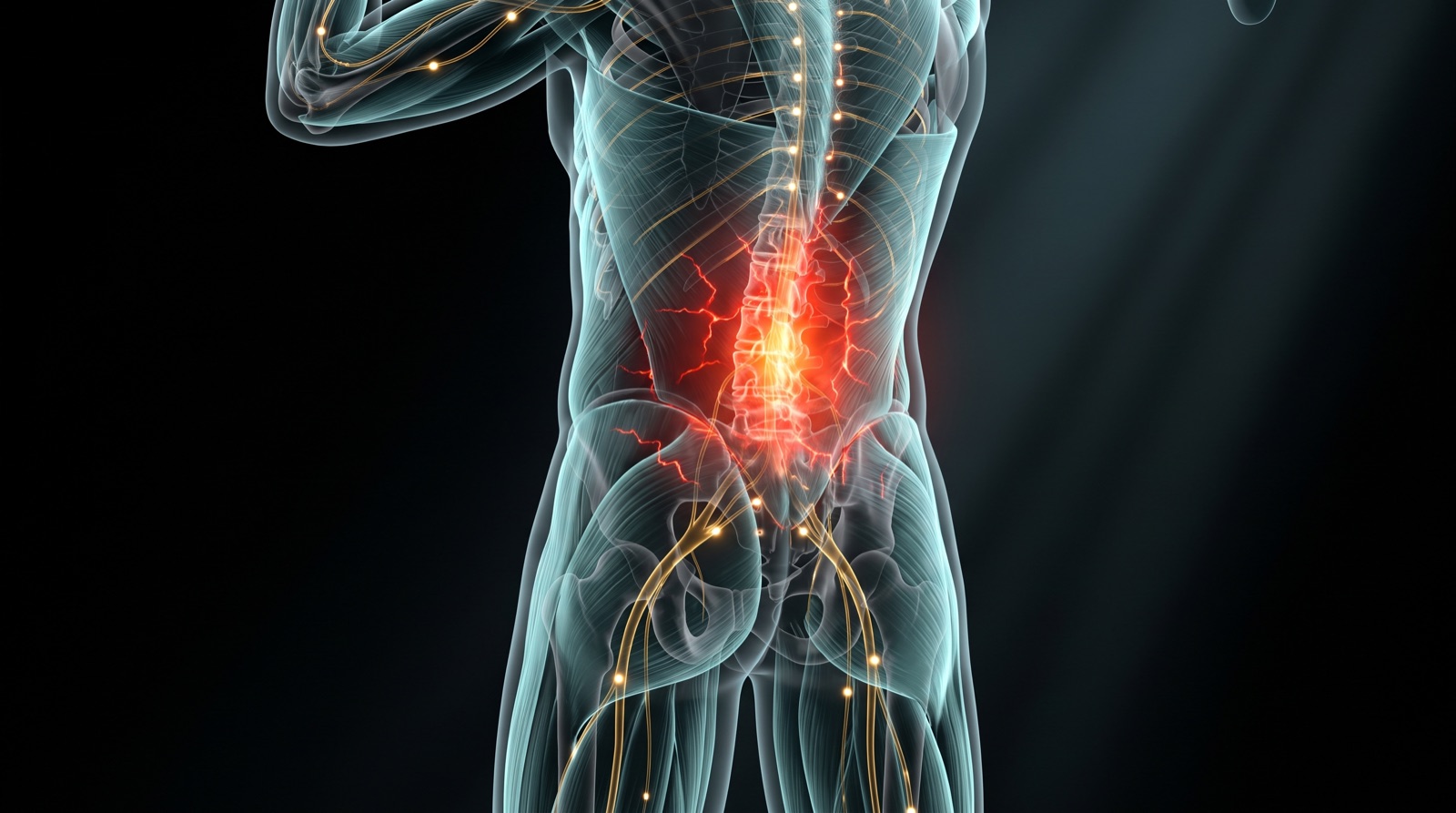
 Golf injuries
 Lower back pain in golfers
Lower back pain is the single most common complaint in golf, affecting close to a third of players. I treat it as an advanced sports remedial therapist in Paddington, Brisbane: hands-on soft tissue work that looks past the sore spot to the movement driving it.
Why the swing loads your lower back
A golf swing sends the club head through a fast arc, and your lower back sits in the middle of it: caught between hips that rotate hard and a base that stays planted. Do that a few hundred times a week and the tissue around the lumbar spine takes the load.
Most golf back pain is overuse, not a single dramatic injury. It builds quietly, then announces itself late in a round or the morning after.
Where the problem usually starts
The pain sits in your lower back. The cause is often somewhere else: a hip that will not turn, a glute that has stopped pulling its weight, or a mid-back that has lost its rotation, so the lower back is forced to make up the difference.
This is the part most people miss. Treat only where it hurts and it comes straight back. Find the driver and treat that, and it holds.
What to expect
Many people feel a shift in the first session. Lasting change usually takes a few sessions across a couple of weeks, alongside a small amount of homework so it stays fixed.
How the treatment works
Assessment
I take your history, watch how you move, and use orthopaedic testing to rule things in or out. Black and white: positive or negative.
Treatment
Hands-on soft tissue work, with real time on the table. I treat the whole area involved, not just the point of pain.
Education
You leave understanding your own body. A few sessions in, you can tell me what is happening and why. That is what keeps it from coming back.
Common questions
Should I stop playing?
Not always. Sometimes we adjust load rather than stop completely. I will give you a straight answer for your situation once I have assessed it.
Could it be a disc?
I do not diagnose disc injuries. That needs imaging and a medical opinion. What I can do is assess the soft tissue and how you move, treat what is within my scope, and refer you on if the picture suggests you need a scan or a doctor.
Is this a sports massage?
No. This is clinical treatment for a specific problem, not a general relaxation rub down. I assess, find the cause, treat it, and teach you how to keep it away.
Sort the cause of your back pain
Book an assessment and we work out what is actually driving it.
Book an assessment